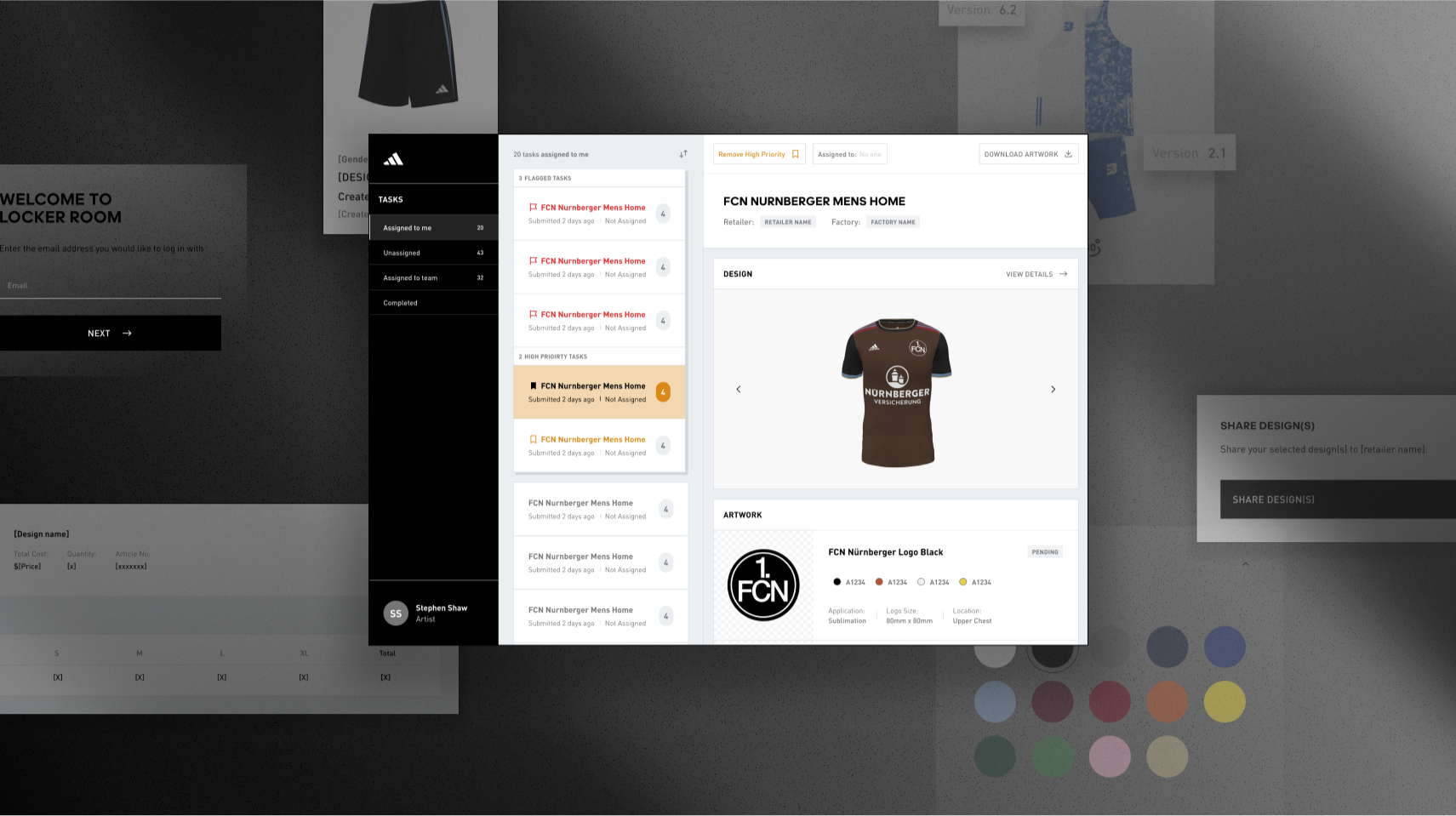
Locker Room: Designing identity through teamwear
I’ve been partnering with adidas for the past 2.5 years, working across multiple initiatives to evolve their Locker Room platform. Originally designed for sales reps and retailers, the platform serves top Premier League, Spanish League, and German League clubs, as well as leading US colleges across multiple sport categories.
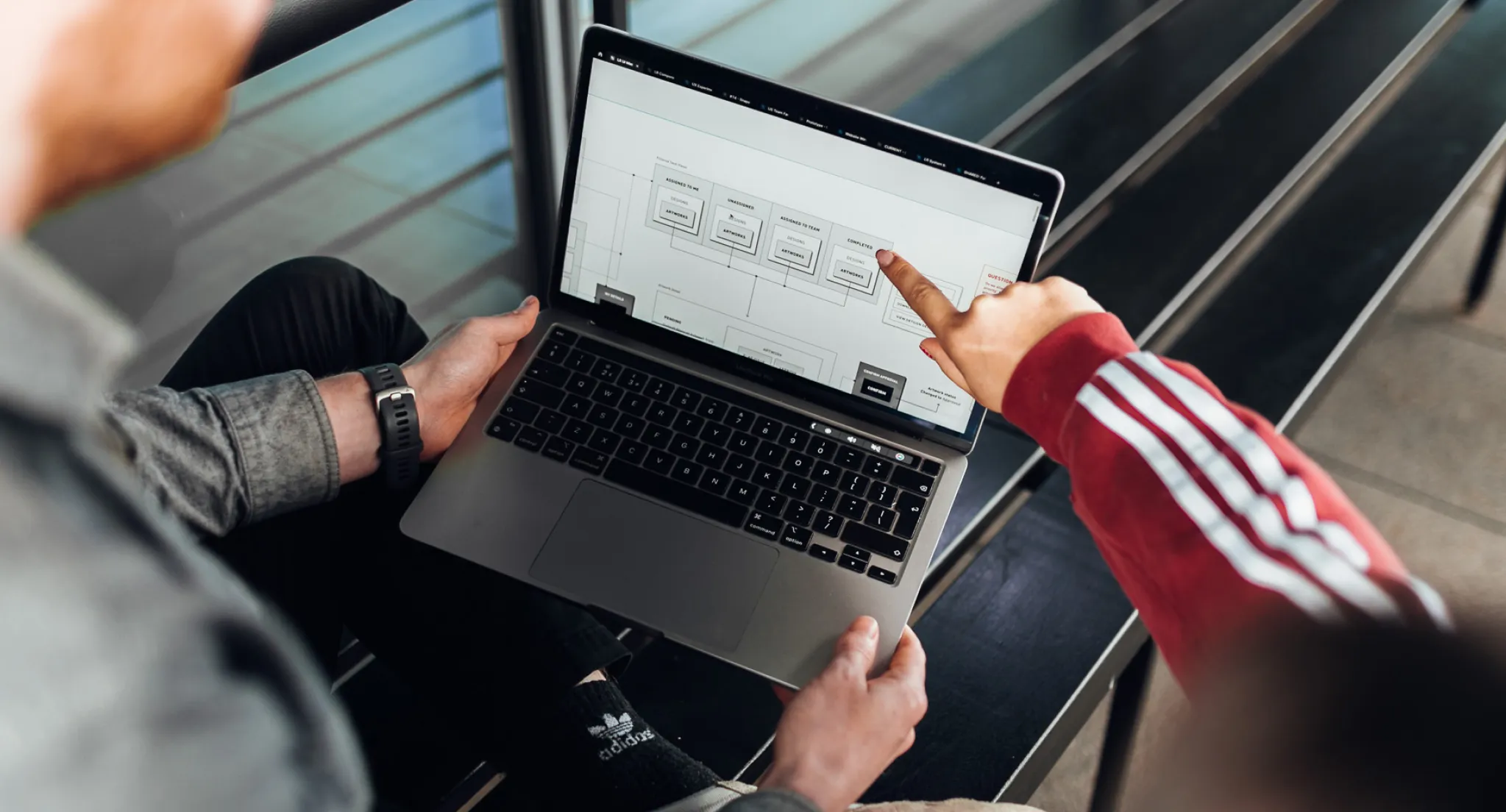
As part of a multidisciplinary team at Big Motive including service designers, researchers, and UI/UX designers, I’ve contributed to numerous projects ranging from feature development to strategic future visioning. Here are four key initiatives that showcase the breadth and impact of our ongoing collaboration.
Part 1: Introducing Folders - Organizing for scale
User research revealed a critical productivity issue for retailers managing thousands of designs. As one retailer explained: “So for us, right now I’m looking at as we’ve merged with Soccer Post and our Soccer Pro accounts, we have a thousand designs in there… Trying to find an order to reorder from, you know, a design that was created last summer is a nightmare. It’s time consuming.”
This wasn’t just a frustration—it was actively preventing retailers from offering items to customers because they couldn’t efficiently find and organize their designs.
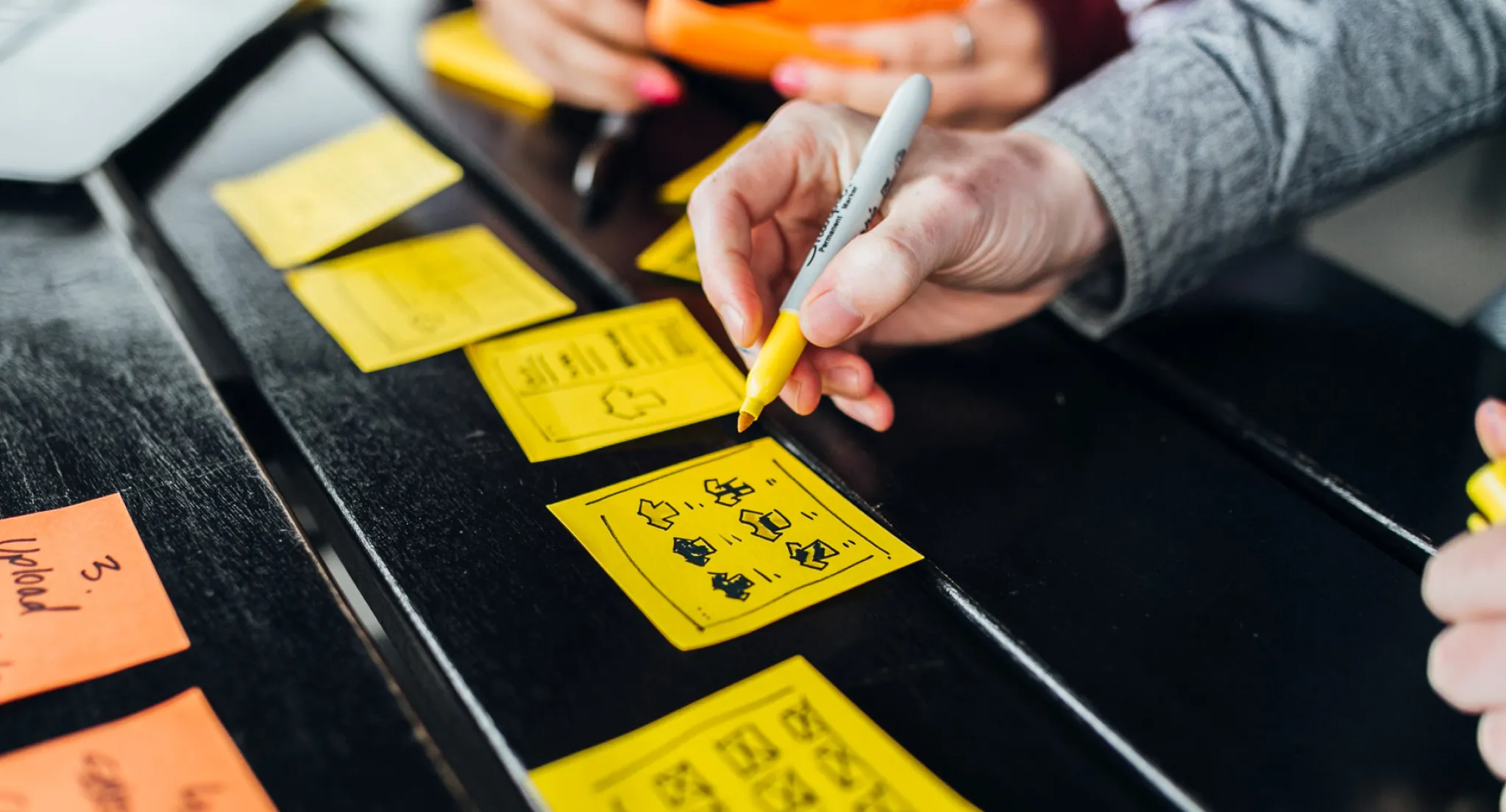
I used “vibe coding” in Figma to test interactions before committing to UI design, focusing on the feel of dragging and dropping, toast notification timing, and other micro-interactions. We studied adjacent folder applications like Dropbox and Google Drive for best practices, then updated the product cards to create better alignment and added overflow menus for single item actions. The result was a cleaner grid system that created more harmony between elements while solving the core organizational challenge.
Part 2: Share Design - Enabling collaboration
Sales reps needed a way to share designs with customers and give them the opportunity to design themselves or view 3D models for internal sharing. The challenge was that this required an entirely new login system—previous users relied on adidas’ Microsoft enterprise authentication, but customers needed their own access.
I contributed to designing a different ordering workflow for submitting draft orders and helped create the new authentication experience that opened up the platform to a broader user base while maintaining security and brand consistency.
Part 3: Weight Room - Optimizing internal workflows
Weight Room was a completely new platform for artwork approval and revision, designed to replace an email-based workflow that was slowing down production timelines. The goal was to improve efficiency and reduce lead times by supporting the artwork team and giving factories an easy way to offer feedback.
Since this was a greenfield project, we could optimize the experience from scratch. I helped design an “inbox” style UI similar to email that users could work through to approve or reject items, which then pushed feedback back to the original user. We tested this approach with both artwork users and factory users, even optimizing for edge cases specific to certain markets. This systematic approach to approval workflows dramatically reduced the back-and-forth that was happening via email.
Part 4: Extending Adidas Design Language beyond ecom
I led the design system work, creating a branch of ADL (Adidas Design Language) with optimizations for our specific users while ensuring existing ADL components could complement it. This meant developing components designed for internal tools that could be reused in our main public platform.
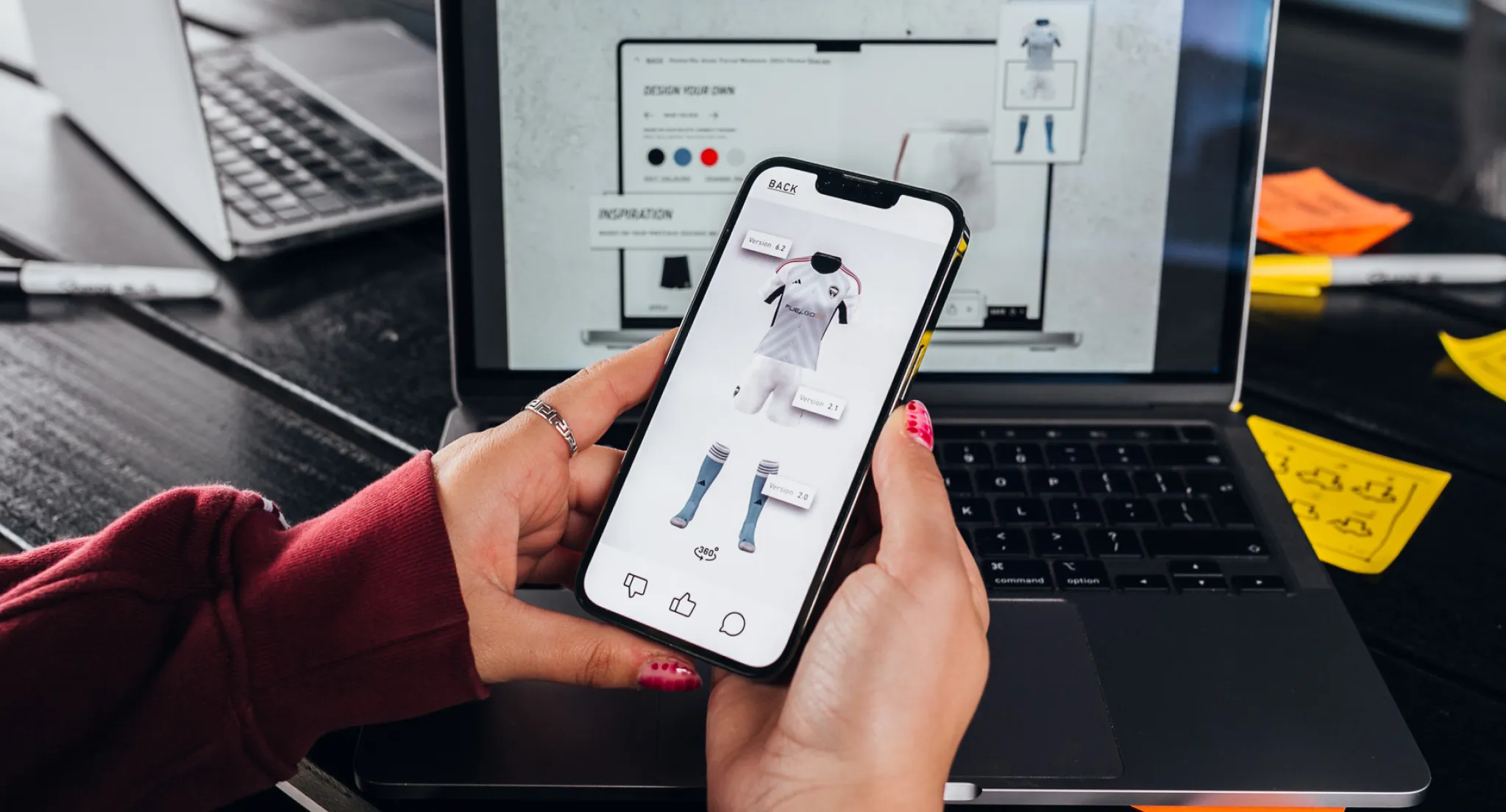
This work established patterns that could scale across different user types and use cases, ensuring consistency while allowing for the specialized needs of different parts of the platform.
Beyond feature development
Our partnership has also included strategic work like developing future vision prototypes to help steer product strategy, demonstrating how design research and prototyping can influence long-term platform direction.
Impact of ongoing collaboration
This sustained partnership has allowed us to move beyond surface-level improvements to tackle fundamental platform challenges. From organizing thousands of designs to streamlining artwork approval workflows, each project built on insights from the previous work.
The folders feature alone transformed how retailers engage with the platform, making them more willing to offer customization options to customers. Weight Room reduced approval cycles from days to hours. And our design system work created a foundation for future platform evolution.
This ongoing partnership has reinforced my belief in the value of embedded, long-term collaboration. When you have the trust and context that comes from sustained partnership, you can move beyond quick fixes to create systematic improvements that compound over time.